Walking gets undersold as a weight loss tool. It's not intense enough, people like to say. You need serious cardio. You need to sweat. In reality, walking is low-impact, repeatable every day, and burns calories in a way that most people can actually sustain long-term. Pair it with a good iPhone step tracker and you've got a simple, data-driven habit. The key is understanding what drives the results and what doesn't.
Yes, Walking Burns Calories
The rough rule: walking one mile burns about 80–100 calories for an average adult. That means 10,000 steps — roughly 5 miles — burns somewhere between 400 and 500 calories for most people, according to established MET (metabolic equivalent) data from the Ainsworth et al. Compendium of Physical Activities, the standard reference used by exercise physiologists. A step counter app on your iPhone makes it easy to see exactly where you land each day without any guesswork.
A pound of fat is approximately 3,500 calories. With 500 calories burned per day, you'd lose roughly one pound per week. There are other important factors like calorie intake and nutrition, but still, walking can have a meaningful impact, especially when combined with consistent healthy eating.
| Pace | Speed | Calories/hour (155 lb person) | Rough steps/hour |
|---|---|---|---|
| Casual | 2.0 mph | ~176 | ~2,000 |
| Moderate | 3.0 mph | ~232 | ~3,000 |
| Brisk | 3.5 mph | ~267 | ~3,500 |
| Fast | 4.0 mph | ~314 | ~4,000 |
Pace Matters More Than You Think
While total distance determines total calories burned, walking at a brisk pace (around 3–4 mph) keeps your heart rate in a zone where your body preferentially burns fat for fuel. This is sometimes called Zone 2 cardio, which is a low-to-moderate intensity where you can hold a conversation, but are breathing a bit harder.
You don't need to sustain this pace the entire time. Even adding a few brisk intervals to an otherwise casual walk increases the metabolic benefit without adding significant strain.
Incline Changes Everything
Adding incline, whether on a treadmill or a hilly route, dramatically increases calorie burn. A 10% incline, at the same pace as flat walking, can burn 50–60% more calories. If you've hit a plateau in your results, incline walking is often an easy strategy to use.
Consistency Beats Intensity
The biggest advantage walking has over more intense exercise is that you can do it every day. Running, High Intensity Interval Training (HIIT), and strength training all require recovery time. Walking generally doesn't. A consistent 30–45 minute walk daily adds up to 200+ miles over a year. That kind of accumulated movement makes a real difference on the scale and in how you feel.
Research backs this up. A 2009 ACSM Position Stand by Donnelly et al., published in Medicine & Science in Sports & Exercise, found that moderate-intensity physical activity sustained over time — the profile of a daily walking habit — is among the most effective strategies for long-term weight maintenance, largely because it's easier to sustain through schedule changes, travel, and life in general.
What Won't Work
Walking more doesn't cancel out a poor diet. The math sounds simple, burn more, eat the same, but hunger hormones are responsive to activity, and many people unconsciously eat back the calories they burn. Walking works best as part of a broader approach, not a substitute for nutritious eating
It's also worth knowing that your body adapts. As you walk more, it becomes more efficient at it, and your calorie burn per mile gradually decreases. Varying your route, pace, and terrain keeps your body from fully adapting and keeps the results coming.
How to Get Started
- Set a daily step goal you can hit 5 out of 7 days — not your max, your sustainable floor
- Aim for at least 20–30 minutes of continuous walking rather than scattered short trips
- Add incline or brisk intervals 2–3 times per week once the habit is established
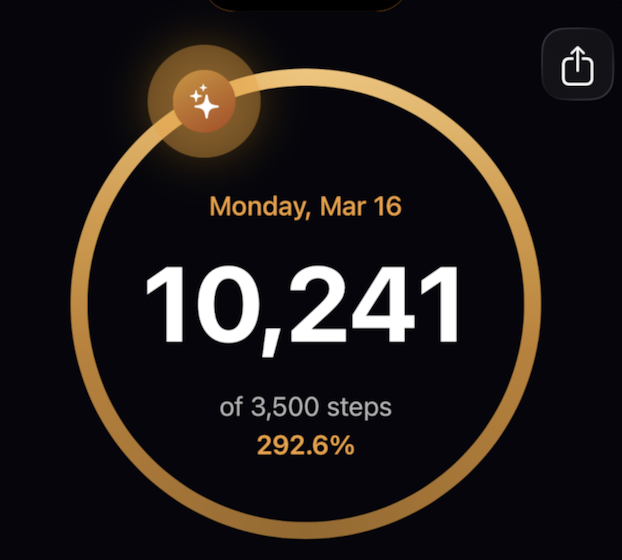
- Track your steps with an iPhone walking app — most people overestimate how much they move, and seeing the real number daily is one of the strongest behavior-change nudges there is
StepGoals is an iPhone walking app built to make consistency easier. It reads your steps directly from Apple Health, sets daily targets that adjust to your pace, tracks your streak so you don't lose momentum, and awards you when you hit milestones. If you're using walking as a weight loss tool, having a dedicated step counter app on your iPhone turns a vague intention into a measurable daily habit.
