Working from home (WFH) has a hidden cost that can show up in your step count and therefore your health. Office workers average 2,000 to 3,000 more steps per day than remote workers, not because they are more dedicated to fitness, but because their environment builds movement in automatically. The commute. The walk from the parking lot. The trip down the hall to a meeting. The coffee run. None of that is exercise in any meaningful sense, but it adds up. When you work from home, that structure largely disappears and most people never fully replace it. Getting more steps when working remotely is not only about willpower. It is about deliberately rebuilding the movement that your old routine provided for free.
Understand What You Have Actually Lost
The first step is making the problem concrete. A typical office commute by foot or transit adds 1,500 to 2,500 steps each way. Walking between meetings, going to the printer, visiting a colleague's desk, getting lunch, these micro-movements collectively add another 1,000 to 2,000 steps across a workday. None of it feels like exercise, but it keeps your body moving at regular intervals and your daily total climbing steadily.
At home, you can go from bed to desk to couch and clock fewer than 1,000 steps. If you are serious about a daily step goal and maintining healthy living, you need to treat this deficit as a structural problem, not just a motivation problem.
Build Movement Into Your Calendar
Treat walking breaks the way you treat meetings: schedule them. Block 10 to 15 minutes at the top of the hour, twice in the morning and twice in the afternoon. You do not need to go far. A loop around the block, a walk around the building, or even laps inside your home all count. The key is that these breaks are protected time, not something you do if you happen to have a spare moment. Hey, I remember the early days of the pandemic when all outside movement was sensitive and I found myself walking around my bedroom. Not ideal, but it worked.
Research on sedentary behaviour consistently shows that breaking up sitting time at regular intervals is more beneficial than a single long walk at the end of the day. A 10-minute walk every two hours produces better metabolic outcomes than 40 minutes of walking crammed into one session. Frequency matters nearly as much as total volume.
Turn Calls Into Walks
Most remote workers spend a significant portion of their day on calls and video meetings. Not all of those require you to be on camera. Phone calls, audio-only standups, one-on-ones, and listening-only sessions are all opportunities to walk. Put in your headphones and take the call on the move. I know I've done it.
A 30-minute phone call at a moderate pace adds roughly 3,000 steps. Do that a few times a week and you have added 6,000-9,000 steps to your weekly total without carving out any additional time. The walking time calculator can help you estimate how far a call-length walk will take you based on your pace.
Create a Commute Substitute
The commute served a purpose beyond getting you to work. It created a physical and mental transition between home life and work mode. Many remote workers who stop commuting report that their days blur together and their movement drops sharply at the same time. These two things are connected.
A deliberate commute substitute, a 10 to 20 minute walk before you sit down to work, and another one at the end of the day, recreates that transition. It signals to your brain that the day is starting and ending. It adds 2,000 to 4,000 steps. And it prevents the slow drift toward a completely sedentary schedule that hits many remote workers within a few months of starting WFH. The best time of day to walk breaks down how morning and evening timing affect mood, sleep, and fat burning if you want to optimise when you take these walks.
Use Your Home Environment Differently
Most people treat their home as a static environment. It does not have to be. A few deliberate changes add steps without requiring extra time:
- Take calls pacing rather than sitting.
- If you have stairs, use them as a movement trigger: every hour, one trip up and down.
- Put the things you use frequently like water, snacks, chargers at the opposite end of your space from your desk.
- Set a lap route. Map a path through your home or building that you know is approximately 500 steps, and walk it during short breaks without going outside.
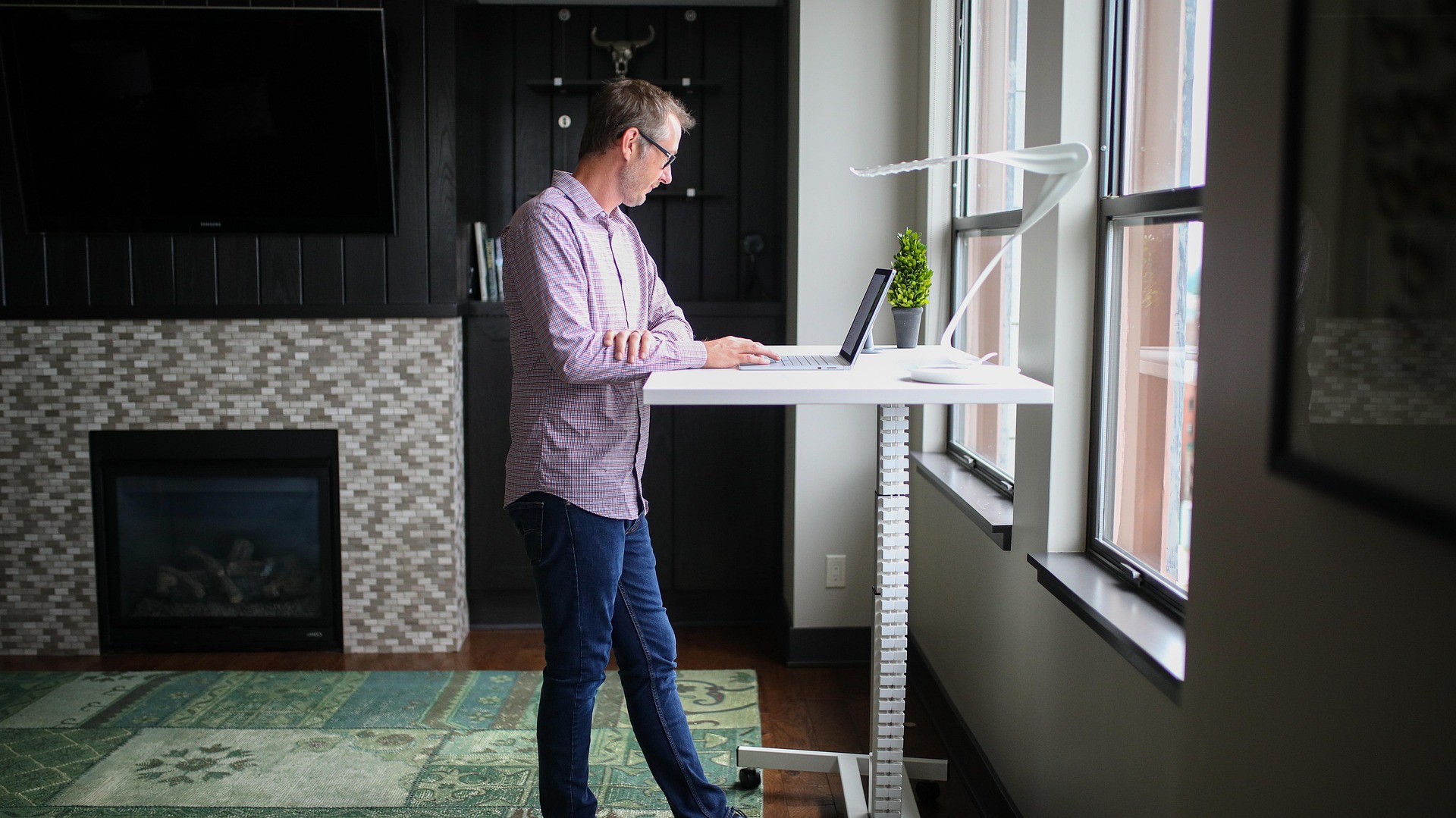
- Use a standing desk for part of the day. Standing burns more calories than sitting and keeps your body more primed to move.
None of these are dramatic changes. Combined, they can add 1,500 to 2,000 steps to a day without a single dedicated walk.
Attack the Afternoon Slump
The 2 to 4pm window is when remote workers are most likely to stay glued to their desk. Energy drops, motivation fades, and the easiest thing to do is scroll or snack. This is also the worst time to stay sedentary. A 15 to 20 minute walk in the early afternoon has been shown to restore alertness and improve focus more effectively than caffeine for most people.
Make the afternoon walk non-negotiable. It is the single highest-return movement habit for remote workers because it replaces an existing low-productivity period with something that actively improves the hours that follow. If you are not sure how to fit it in, check the guide on walking timing by goal for how afternoon walks specifically affect energy and focus. An idea can be to run a quick errand if your schedule allows, or go grab a snack from a neighborhood shop.
Set a Realistic Daily Target and Track It
If you are coming from a sedentary WFH routine, jumping straight to 10,000 steps is a recipe for a few good days followed by burnout. A smarter approach is to find your current daily average and add 1,000 steps per week until you reach a sustainable target. Not sure what target makes sense for your situation? The step goal picker can help you find a number based on your activity level and goals. And for context on what the research says different step counts actually deliver, the breakdown of daily step targets by age and goal is worth reading.
Make It Stick with StepGoals
Structure gets you moving. Motivation keeps you going. StepGoals is built for exactly this scenario. The Motivation Box sits on the main screen and shows you two live targets — the next milestone in your daily goal progression and a target drawn from your own step history — along with an estimated time to reach each one. On a busy WFH day when a 10,000-step goal feels overwhelming, seeing that you are 400 steps from your next milestone and can get there in about 4 minutes is often enough to get you off the chair.
Daily challenges give you a specific step target to chase each day, separate from your main goal. Streaks track your consistency and build the kind of momentum that makes skipping a day feel like a real loss. And GPS Sessions let you log your intentional walks with route and pace, so you can see the cumulative impact of every walk-and-talk and lunchtime loop over time.
Download StepGoals free and start rebuilding your movement habit, one milestone at a time.
